
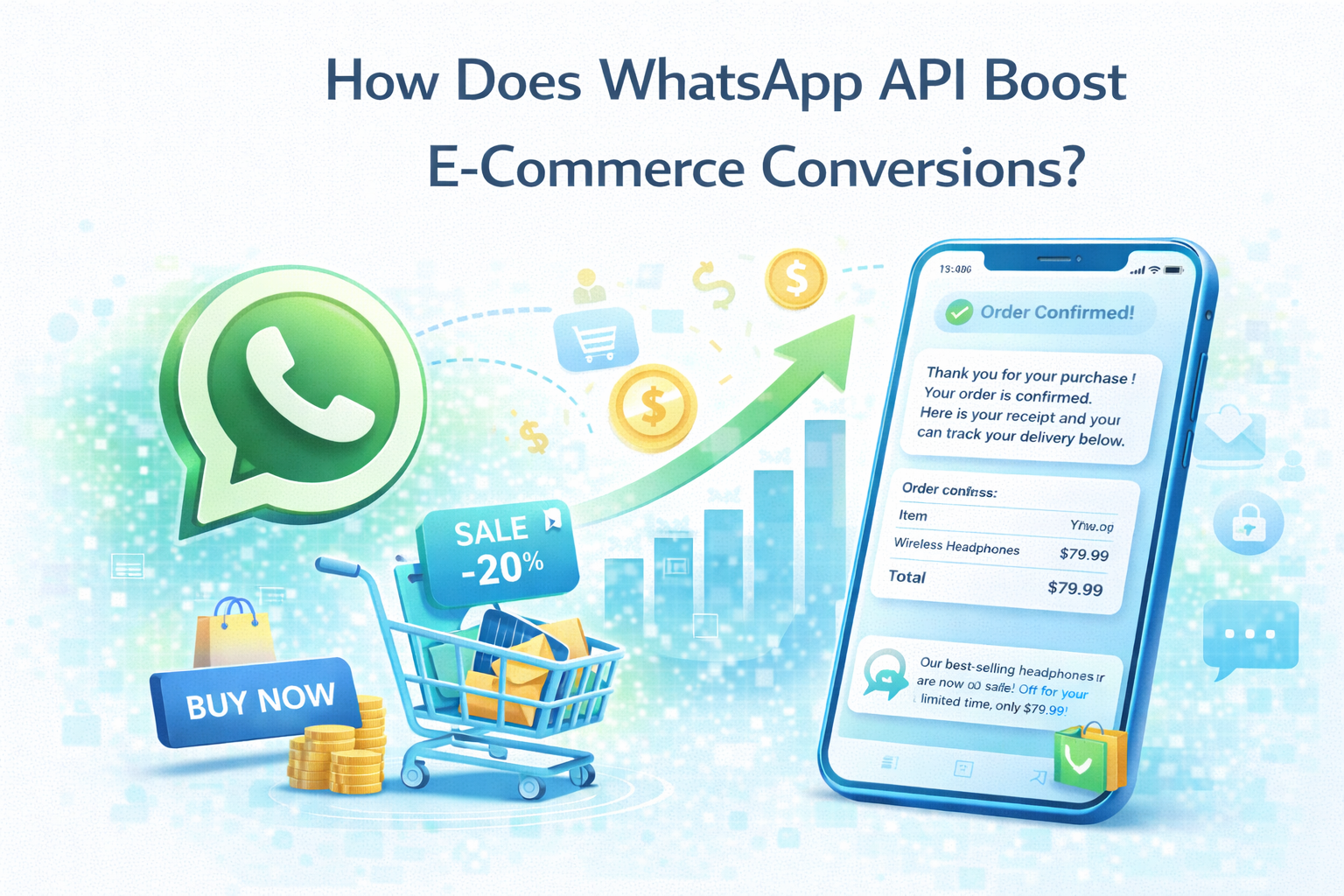
How Does WhatsApp API Boost E-Commerce Conversions?
In today’s fast-moving digital commerce landscape, customers expect instant responses, personalized communication, and seamless buying experiences. Traditional email and SMS channels often fail to deliver the real-time engagement modern shoppers demand. This is where WhatsApp API emerges as a powerful tool for e-commerce brands looking to increase conversions, reduce cart abandonment, and build long-term customer loyalty.
By enabling automated, interactive, and personalized messaging at scale, WhatsApp API bridges the gap between browsing and buying—directly inside the customer’s favorite messaging app.
Why WhatsApp Matters in E-Commerce Today
WhatsApp is one of the most widely used messaging platforms globally, with exceptionally high open and response rates. Unlike emails that remain unread or ads that get ignored, WhatsApp messages are typically opened within minutes. This makes WhatsApp API an ideal channel for time-sensitive e-commerce communication.
For online stores, speed and relevance are everything. Whether it’s a product inquiry, payment confirmation, or delivery update, instant communication builds trust and removes friction from the buyer journey.
What Is WhatsApp API for E-Commerce?
WhatsApp API (also known as WhatsApp Business API) is designed for medium and large businesses that need scalable, automated messaging. Unlike the WhatsApp Business App, the API integrates directly with your e-commerce platform, CRM, and automation tools.
Using WhatsApp API, e-commerce businesses can:
- Send automated notifications
- Run chatbots for sales and support
- Manage conversations across multiple agents
- Track customer interactions in real time
This direct integration helps brands convert conversations into sales more efficiently.
How WhatsApp API Improves E-Commerce Conversions

1. Faster Customer Responses Drive Purchase Decisions
Delayed responses are one of the biggest reasons customers abandon carts. With WhatsApp API, businesses can instantly respond to customer queries using automated workflows or AI chatbots.
Quick answers about pricing, availability, or delivery timelines significantly increase the likelihood of purchase.
2. Personalized Messaging Increases Engagement
Generic messages don’t convert. WhatsApp API allows businesses to personalize messages using customer data such as name, order history, and browsing behavior.
Personalized product recommendations, exclusive offers, and tailored follow-ups create a one-to-one shopping experience—leading to higher engagement and improved conversion rates.
3. Cart Abandonment Recovery Becomes Seamless
Cart abandonment is a major challenge in e-commerce. With WhatsApp API, businesses can automatically trigger reminders when customers leave items in their cart.
These reminders can include:
- Product images
- Discount codes
- Direct checkout links
Such interactive messages often recover sales that would otherwise be lost.
4. Automated Order Updates Build Trust
Trust plays a critical role in conversion. WhatsApp API enables automated transactional messages such as:
- Order confirmations
- Payment receipts
- Shipping updates
- Delivery alerts
Real-time updates reassure customers and reduce post-purchase anxiety, increasing repeat purchases.
5. Rich Media Enhances the Shopping Experience
Unlike SMS, WhatsApp API supports rich media including images, videos, PDFs, and interactive buttons. E-commerce brands can showcase product catalogs, demo videos, size charts, and FAQs directly inside the chat.
This immersive experience reduces decision fatigue and helps customers move confidently toward checkout.
6. Two-Way Communication Improves Customer Support
WhatsApp API enables real-time, two-way conversations. Customers can ask questions, raise concerns, or request support—all within the same chat thread.
By resolving issues instantly, brands prevent drop-offs and increase the chances of conversion, even during the support interaction.
7. Scalable Automation Without Losing the Human Touch
Automation doesn’t mean losing personalization. With WhatsApp API, businesses can combine automation with human intervention.
Chatbots handle routine queries, while agents step in for complex conversations. This balance improves efficiency without compromising customer experience—directly impacting conversion performance.
Why E-Commerce Brands Prefer WhatsApp API Over Traditional Channels
Compared to email and SMS, WhatsApp API delivers:
- Higher open rates
- Faster response times
- Rich interactive messaging
- Stronger customer trust
These advantages make WhatsApp API a conversion-focused communication channel rather than just a notification tool.
Best Use Cases of WhatsApp API in E-Commerce
- Product discovery and recommendations
- Cart abandonment follow-ups
- Order and delivery notifications
- Customer support and returns
- Feedback collection and reviews
- Post-purchase upselling and cross-selling
Each use case directly contributes to higher conversions and improved customer lifetime value.
Conclusion
E-commerce success depends on how well brands communicate at every stage of the customer journey. WhatsApp API transforms conversations into conversions by offering speed, personalization, automation, and trust—all within a familiar messaging environment.
For online businesses aiming to reduce friction, recover lost sales, and deliver superior customer experiences, WhatsApp API is no longer optional—it’s essential.
FAQ: WhatsApp API for E-Commerce
Is WhatsApp API suitable for small e-commerce businesses?
Yes, especially for growing brands that need automation, scalability, and better customer engagement.
Can WhatsApp API reduce cart abandonment?
Absolutely. Automated cart reminders and personalized follow-ups significantly improve recovery rates.
Is WhatsApp API secure for customer transactions?
Yes. WhatsApp uses end-to-end encryption and approved message templates for secure communication.
Does WhatsApp API support automation?
Yes. Businesses can automate messages, chatbots, notifications, and workflows seamlessly.
How quickly can WhatsApp API improve conversions?
Most businesses see engagement and conversion improvements within weeks of implementation.
Written by Textspeed
Telecom & CPaaS Technical Specialists · Reviewed for AccuracyOur content is authored by enterprise communications specialists and strictly reviewed for technical accuracy, regulatory compliance (TRAI/DLT), and industry best practices. Read our Editorial Policy to learn how we maintain trust.