
Introduction
Healthcare communication often depends on timing. A missed appointment reminder, delayed report notification, or unanswered patient query can create unnecessary friction for both patients and healthcare teams. As patients increasingly expect convenient digital communication, healthcare organizations need a channel that is familiar, accessible, and easy to manage.
The WhatsApp Messaging API for Healthcare provides businesses with a structured way to communicate with patients through WhatsApp while connecting messaging with their existing systems.
Hospitals, clinics, laboratories, pharmacies, diagnostic centers, and healthcare service providers can use API-powered messaging to automate routine communication, support appointment management, and keep patients informed.
What Is WhatsApp Messaging API for Healthcare?
The WhatsApp Messaging API for Healthcare allows healthcare organizations to integrate WhatsApp communication with applications such as appointment systems, CRM platforms, patient management software, and customer support tools.
Instead of depending entirely on manual messaging, organizations can create automated workflows for common communication requirements.
Depending on the use case and applicable policies, businesses can use it for:
- Appointment confirmations
- Appointment reminders
- Report availability notifications
- Follow-up reminders
- Patient inquiries
- Service updates
- Healthcare campaign communication
- Customer support
The API helps turn WhatsApp into a more organized communication channel rather than simply another messaging application.
Why Healthcare Businesses Need WhatsApp API
Patients often prefer receiving important updates through channels they already use regularly. WhatsApp can provide a convenient communication experience while helping healthcare teams reduce repetitive manual tasks.
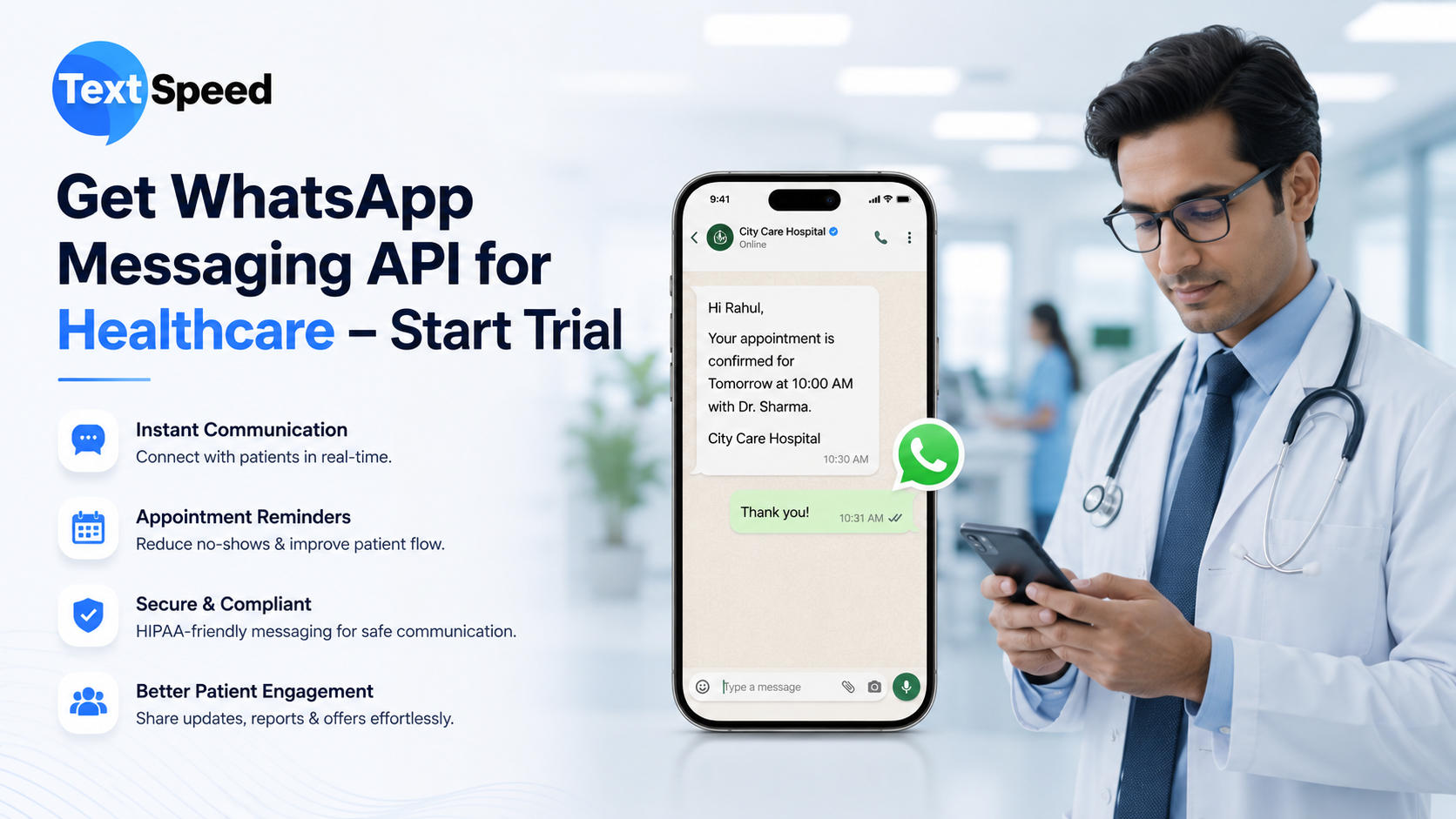
For example, when a patient schedules an appointment, the system can automatically trigger a confirmation message. A reminder can then be sent before the appointment, reducing the need for staff to make every reminder call manually.
This creates a smoother process for both patients and healthcare professionals.
Key Use Cases
Appointment Booking and Reminders
Clinics can send appointment confirmations, date and time details, doctor information, and reminders through WhatsApp.
Patients can also be directed toward appropriate options for rescheduling or contacting the clinic.
Diagnostic Report Notifications
Laboratories and diagnostic centers can notify patients when reports become available. Where appropriate, the message can direct the patient to a secure system or portal rather than sharing sensitive information directly in the conversation.
Patient Follow-Ups
Healthcare providers can send appropriate follow-up reminders after consultations or procedures, helping patients stay informed about scheduled next steps.
Customer Support
Patients frequently have questions about clinic timings, departments, services, locations, and appointment availability. Automated responses can handle common questions while more complex conversations can be transferred to staff.
Healthcare Service Updates
Hospitals and healthcare organizations can use WhatsApp to communicate operational updates, service information, and other relevant notifications.
Benefits of WhatsApp API for Healthcare
Faster Communication
Automated messages can reach patients quickly without requiring staff to manually contact every individual.
Reduced Administrative Work
Routine notifications can be automated, allowing healthcare teams to spend more time on patient-facing responsibilities.
Better Appointment Management
Timely reminders can help reduce missed appointments and improve scheduling efficiency.
Centralized Communication
API integration can bring WhatsApp conversations into a broader customer or patient communication workflow.
Improved Patient Experience
Patients receive useful information through a familiar communication channel instead of depending entirely on phone calls or emails.
Privacy and Responsible Healthcare Messaging
Healthcare organizations handle sensitive information, so privacy and security should be considered before implementing any messaging solution.
Businesses should avoid placing confidential medical information in ordinary messages unless the communication method and applicable requirements specifically support it.
Good practices include:
- Use secure systems for sensitive information.
- Share appropriate links to protected patient portals.
- Limit access to authorized staff.
- Follow applicable privacy and healthcare regulations.
- Obtain appropriate customer consent where required.
- Maintain clear communication policies.
The technology should support healthcare communication without compromising patient confidentiality.
Choosing the Right WhatsApp API Solution
Before starting a trial, healthcare businesses should evaluate whether the platform supports their operational requirements.
Important considerations include:
- WhatsApp Business API connectivity
- CRM or software integration
- Automated workflows
- Multi-agent support
- Chatbot functionality
- Message analytics
- Secure access controls
- API documentation
- Technical assistance
- Scalability
A trial can be useful for testing workflows before deploying the solution across multiple departments or locations.
How to Start a WhatsApp API Trial
Healthcare businesses can begin with a focused use case rather than automating everything immediately.
For example:
Step 1: Select one communication workflow, such as appointment reminders.
Step 2: Define the message journey and customer actions.
Step 3: Connect the API with the relevant business system.
Step 4: Test message delivery and customer responses.
Step 5: Measure results and identify areas for improvement.
Step 6: Expand the solution to additional communication workflows.
This approach allows organizations to understand the platform's value before scaling.
Final Thoughts
The WhatsApp Messaging API for Healthcare can help hospitals, clinics, laboratories, and other healthcare organizations create faster and more organized patient communication. From appointment reminders and report notifications to customer support and follow-ups, automation can reduce repetitive work while improving the patient experience.
However, healthcare messaging requires careful attention to privacy, security, consent, and responsible communication. Organizations should select a reliable API solution, begin with practical use cases, and test workflows before expanding their implementation.
A well-planned trial can be the first step toward building a more efficient and patient-friendly digital communication system.
FAQs
1. What is WhatsApp Messaging API for Healthcare?
It is an API-based solution that allows healthcare organizations to integrate WhatsApp with business systems for automated patient communication and support.
2. Can hospitals use WhatsApp API for appointment reminders?
Yes. Hospitals and clinics can use it for appointment confirmations and reminders, subject to applicable policies and requirements.
3. Can diagnostic centers send report notifications?
Yes. They can notify patients when reports are ready and direct them to appropriate secure portals or systems.
4. Is WhatsApp API suitable for healthcare communication?
Yes, when implemented with appropriate privacy, security, consent, and data-handling practices.
5. Can I start with a WhatsApp API trial?
A trial can help healthcare organizations test specific workflows, integrations, messaging processes, and customer response before wider deployment.
Written by SEO Specialist
Telecom & CPaaS Technical Specialists · Reviewed for AccuracyOur content is authored by enterprise communications specialists and strictly reviewed for technical accuracy, regulatory compliance (TRAI/DLT), and industry best practices. Read our Editorial Policy to learn how we maintain trust.