
Introduction
Imagine a customer sending a message to a business at 10:30 at night. They want to know the price of a service, check availability, or ask how to place an order. Instead of waiting until the next working day, they receive an immediate response.
That is where a WhatsApp Chatbot becomes useful.
It is an automated conversational system that works through WhatsApp and responds according to predefined rules, business information, or connected applications. Depending on how it is configured, it can answer questions, collect customer details, display options, share information, and direct the conversation to a human employee.
The purpose is not to replace people. It is to take care of repetitive conversations so employees can concentrate on situations that need personal attention.
Why Businesses Are Adopting WhatsApp Chatbots
Customer expectations have changed. People often prefer sending a message rather than calling a business and waiting for assistance.
For companies receiving a high number of enquiries, manually responding to every conversation can consume considerable time. A chatbot can take care of the first stage of communication and keep the customer moving forward.
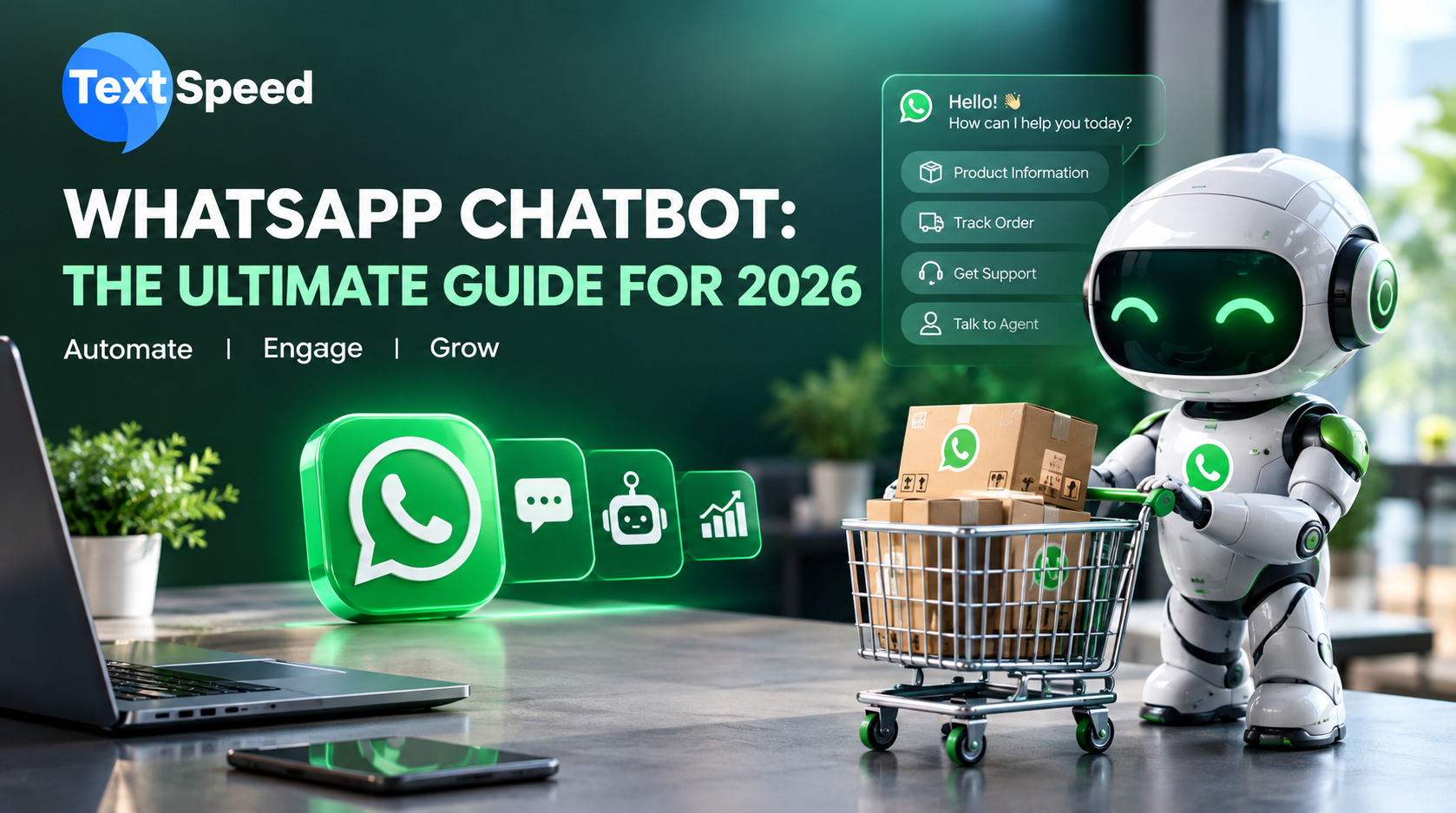
For example, a customer could select:
- Product Information
2. Pricing
3. Order Support
4. Talk to an Agent
The customer chooses an option, and the system provides the relevant response. If the request is complicated, the conversation can be passed to a support or sales representative.
What Can a WhatsApp Chatbot Do?
A chatbot can be designed around the specific needs of a business. Common functions include:
Answer Frequently Asked Questions
Businesses can automate answers for questions about working hours, services, locations, pricing information, policies, and other commonly requested details.
Capture New Leads
Instead of simply displaying a contact number, the chatbot can ask visitors for their name, requirement, location, or other relevant information. The collected details can then be shared with the sales team.
Guide Customers
Menu-based conversations can help customers find information without searching through multiple pages or making repeated enquiries.
Send Reminders
Businesses can use automated workflows for suitable reminders, appointment-related communication, and other customer notifications, subject to applicable WhatsApp requirements and business policies.
Transfer Conversations to Employees
Automation works best when customers can reach a human whenever necessary. A chatbot can identify requests that need personal assistance and route them to an appropriate team member.
Industries That Can Use WhatsApp Chatbots
The technology is flexible enough to support different business models.
Real estate: Collect property requirements, answer basic questions, and arrange follow-ups.
E-commerce: Help customers with product enquiries, order-related questions, and support requests.
Healthcare: Assist with general enquiries and appointment-related communication.
Education: Provide course details, admission information, and enquiry assistance.
Travel and hospitality: Handle questions about services, reservations, and travel information.
Financial services: Provide general information and direct customers to the appropriate service channel.
The conversation flow should always be designed around what customers actually need rather than adding automation simply for the sake of automation.
Connecting WhatsApp with Your Business Systems
A chatbot becomes considerably more useful when it can communicate with other software.
Businesses can connect WhatsApp workflows with CRM platforms, websites, lead management systems, databases, e-commerce applications, and custom software through APIs.
Consider a simple example. A visitor fills out a property enquiry form on a website. Their information enters the company's CRM, and a WhatsApp conversation can be initiated through the appropriate workflow. The chatbot can ask a few qualifying questions before assigning the lead to a sales representative.
This reduces repetitive data entry and gives the sales team useful information before they begin the conversation.
Designing a Better Chatbot Experience
A technically advanced chatbot can still frustrate customers if the conversation is confusing.
A useful chatbot should:
- Keep messages short and clear
- Provide simple choices
- Avoid unnecessary questions
- Understand common customer requests
- Offer a human-agent option
- Capture only relevant information
- Maintain consistent business information
- Make important next steps obvious
Businesses should also review actual conversations regularly. If customers repeatedly ask to speak with an employee at a particular stage, that part of the workflow may need improvement.
WhatsApp Chatbot and Business Growth
The biggest advantage is not automation alone. It is the ability to create a more structured customer journey.
A visitor can move from an advertisement or website to WhatsApp, provide their requirements, receive relevant information, and become a qualified lead. Existing customers can use the same channel for support or updates.
With the right setup, a WhatsApp Chatbot can therefore support marketing, sales, customer service, and follow-up activities through one familiar communication channel.
Choosing a WhatsApp Chatbot Provider
Before selecting a platform, businesses should look beyond basic automated replies. Consider:
- WhatsApp Business API support
- API and CRM integration
- Chatbot workflow flexibility
- Human-agent handover
- Reporting and analytics
- Team management
- Scalability
- Data security
- Technical assistance
- Compliance with WhatsApp policies
A provider should be able to support the business as communication volume and automation requirements grow.
WhatsApp Chatbot Solutions from Textspeed Technology
Textspeed Technology provides business communication solutions covering WhatsApp Business API, chatbot services, SMS, RCS, Voice, Email, IVR, SMPP, and custom API integration.
Businesses can combine these channels to create communication workflows for lead generation, customer support, notifications, marketing, and follow-ups.
For companies looking to reduce repetitive conversations while maintaining a human support option, a WhatsApp Chatbot can be an important part of their communication strategy.
Conclusion
A successful WhatsApp chatbot is not simply an automated reply system. It should understand the customer's journey and make each step easier.
Whether the goal is collecting leads, answering routine questions, supporting customers, or connecting WhatsApp with internal systems, businesses can build workflows around their specific requirements.
In 2026, companies that approach chatbot automation with clear objectives, useful conversations, and human support options can create a more organized and responsive customer experience.
FAQs
- What is a WhatsApp Chatbot?
It is an automated system that manages customer conversations through WhatsApp. - Can a chatbot generate leads?
Yes. It can collect and qualify customer information before passing leads to sales teams. - Can customers talk to a human agent?
Yes. Chatbots can include human-agent handover for complex enquiries. - Can WhatsApp chatbots connect with CRM systems?
Yes. API integration can connect chatbot conversations with CRM and other business applications. - Is a WhatsApp Chatbot useful for small businesses?
Yes. Small businesses can automate FAQs, enquiries, lead collection, and basic customer support.
Written by SEO Specialist
Telecom & CPaaS Technical Specialists · Reviewed for AccuracyOur content is authored by enterprise communications specialists and strictly reviewed for technical accuracy, regulatory compliance (TRAI/DLT), and industry best practices. Read our Editorial Policy to learn how we maintain trust.