
Introduction
In today’s fast-moving digital ecosystem, businesses are constantly searching for reliable, fast, and secure ways to communicate with their customers. While marketing channels like email, push notifications, and social media continue to evolve, one technology is quietly strengthening its role behind the scenes — Transactional SMS.
Traditionally viewed as a simple notification tool, Transactional SMS has now evolved into a critical backend communication asset. It powers essential business operations, ensures real-time engagement, and builds trust at every stage of the customer journey.
The Evolution of Transactional SMS
Earlier, Transactional SMS was limited to sending OTPs, order confirmations, and delivery updates. But with increasing digital dependency, businesses have realized that these messages are more than just alerts — they are touchpoints that directly impact user experience.
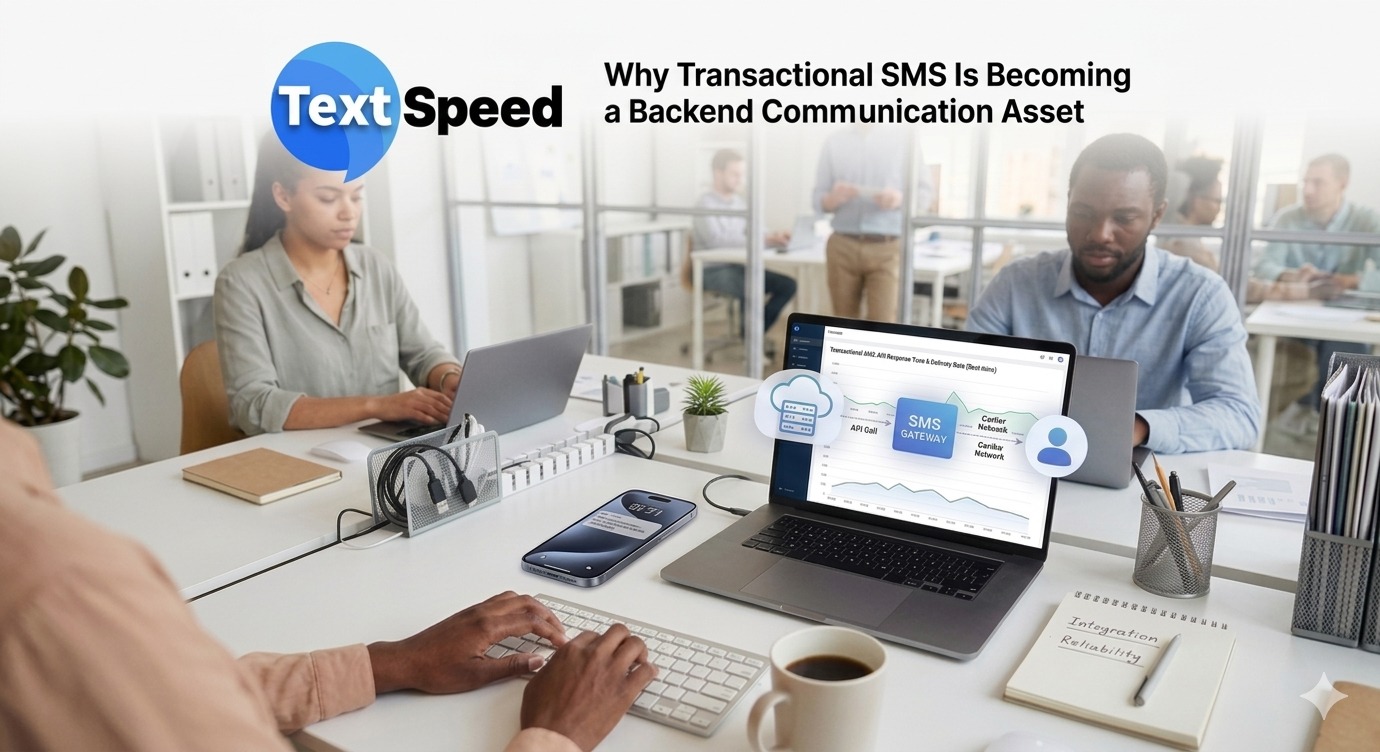
Today, Transactional SMS integrates deeply with backend systems like CRMs, payment gateways, logistics platforms, and authentication services. It acts as a bridge between system-generated events and real-time user communication.
Why Businesses Are Relying on Transactional SMS
1. Instant Delivery with High Open Rates
Unlike emails or app notifications that may go unnoticed, SMS messages are read almost instantly. This makes Transactional SMS the most reliable communication channel for time-sensitive updates.
2. System-Driven Automation
Modern businesses automate workflows, and Transactional SMS fits perfectly into this ecosystem. Whether it's an OTP, booking confirmation, or account alert, messages are triggered automatically without manual intervention.
3. Enhanced Customer Trust
Customers expect transparency. Sending real-time updates through Transactional SMS reassures users about their transactions, builds credibility, and reduces uncertainty.
4. Works Without Internet
One of the biggest advantages of Transactional SMS is that it does not require internet connectivity. This ensures communication even in low-network or rural areas, making it universally accessible.
5. Secure Communication Channel
With increasing cyber threats, businesses prioritize secure communication. Transactional SMS is widely used for two-factor authentication (2FA), making it a key player in user verification and security.
How Transactional SMS Powers Backend Systems
The real strength of Transactional SMS lies in its backend integration capabilities. It is not just a messaging tool—it’s a system enabler.
API Integration
Businesses integrate SMS APIs into their platforms, allowing systems to trigger messages automatically based on user actions.
Event-Based Messaging
Every user action—login, purchase, payment, or cancellation—can trigger a Transactional SMS, ensuring real-time communication.
Data Synchronization
SMS systems sync with backend databases to deliver personalized messages, such as account balances, booking details, or service updates.
Failover Communication
Even if apps or emails fail, Transactional SMS ensures critical messages are still delivered.
Use Cases Across Industries
E-commerce
Order confirmations, shipping updates, delivery alerts.
Banking & Finance
OTP verification, transaction alerts, fraud detection messages.
Healthcare
Appointment reminders, lab reports, emergency alerts.
Travel & Logistics
Booking confirmations, schedule updates, tracking information.
Education
Exam notifications, admission updates, fee reminders.
In all these industries, Transactional SMS acts as a backbone communication layer that ensures seamless user experience.
The Strategic Shift: From Support Tool to Asset
Businesses are now recognizing that Transactional SMS is not just an operational necessity—it’s a strategic asset. Here’s why:
- It reduces customer support queries by providing timely updates
- It improves user retention by maintaining consistent communication
- It strengthens brand reliability and professionalism
- It ensures compliance with regulatory communication standards
As digital platforms become more complex, backend communication needs to be stronger, faster, and more dependable. This is exactly where Transactional SMS excels.
Future of Transactional SMS
With advancements in AI, automation, and cloud communication, the role of Transactional SMS will continue to expand. Businesses may soon use intelligent SMS systems that:
- Predict user behavior and send proactive alerts
- Integrate with AI chatbots for hybrid communication
- Provide deeper personalization using user data
- Work alongside channels like RCS and WhatsApp APIs
Despite new technologies emerging, Transactional SMS will remain irreplaceable due to its simplicity, reach, and reliability.
Conclusion
In a world driven by instant communication, businesses cannot afford delays or failures in critical messaging. Transactional SMS has evolved beyond a simple notification system into a powerful backend communication asset.
It ensures that every important update reaches the customer instantly, securely, and reliably. For businesses aiming to build trust, improve operations, and deliver seamless experiences, investing in Transactional SMS is no longer optional—it’s essential.
FAQs
Q1. What is Transactional SMS?
Transactional SMS is an automated message sent to users for important updates like OTPs, alerts, and confirmations.
Q2. Is Transactional SMS secure?
Yes, it is widely used for secure communications like OTP verification and authentication.
Q3. Can Transactional SMS be automated?
Yes, it works through APIs and triggers messages based on user actions.
Q4. Does Transactional SMS require internet?
No, it works on mobile networks without internet access.
Q5. Why is Transactional SMS important for businesses?
It ensures instant, reliable, and real-time communication with customers.
Written by Textspeed
Telecom & CPaaS Technical Specialists · Reviewed for AccuracyOur content is authored by enterprise communications specialists and strictly reviewed for technical accuracy, regulatory compliance (TRAI/DLT), and industry best practices. Read our Editorial Policy to learn how we maintain trust.