
Introduction
The banking industry operates in an environment where every second matters. Whether it's delivering a One-Time Password (OTP), confirming a successful transaction, notifying customers of suspicious account activity, or sending loan repayment reminders, communication must be fast, secure, and reliable. A delayed message can create customer frustration, while a failed notification can affect both security and customer confidence.
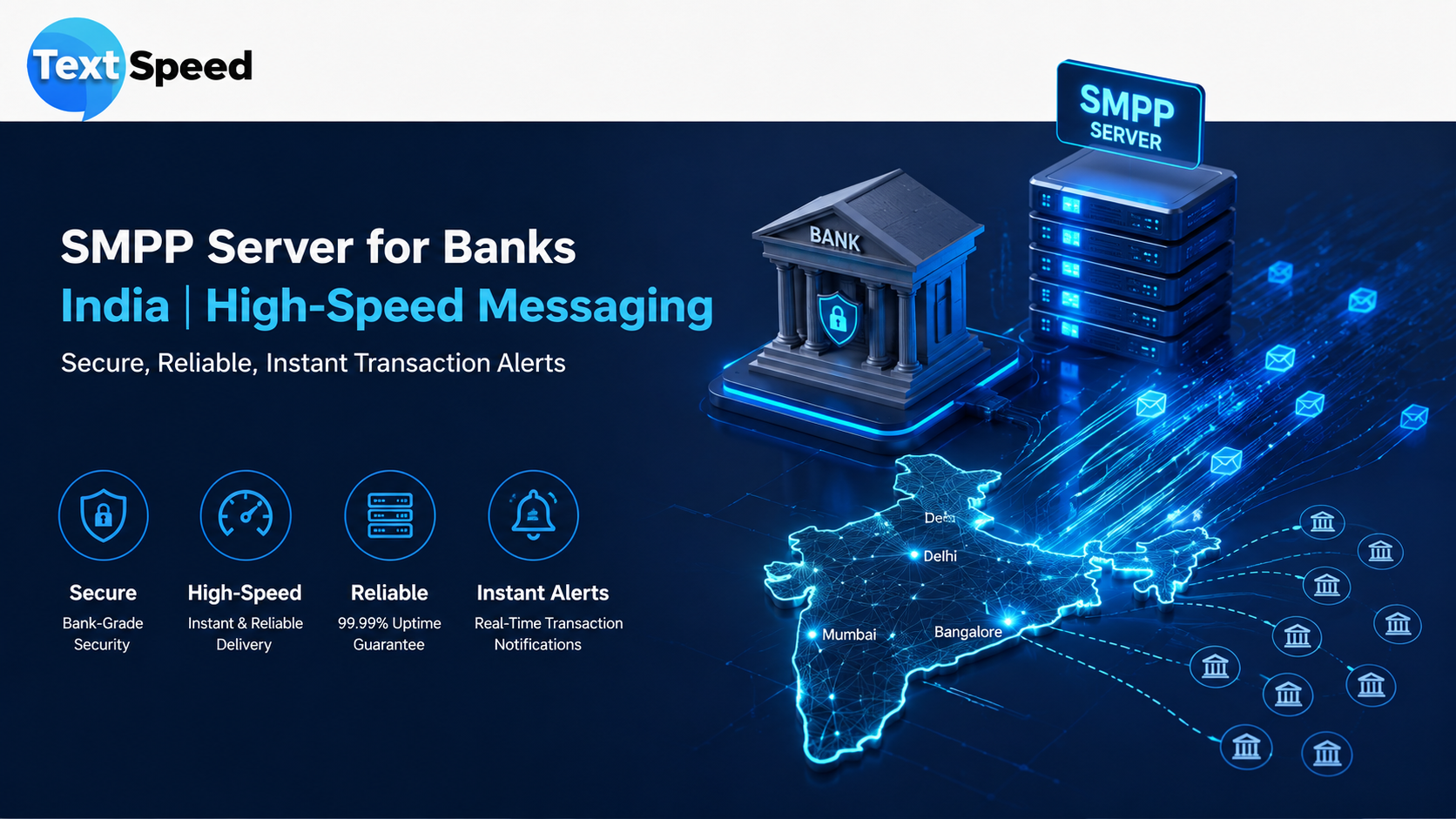
To handle these mission-critical communications, financial institutions rely on an SMPP Server for Banks India. Built for high-volume and low-latency messaging, SMPP (Short Message Peer-to-Peer) technology enables banks to send millions of SMS notifications efficiently while maintaining high delivery performance and system reliability.
As digital banking continues to grow across India, implementing a dependable SMPP Server for Banks India has become an essential part of modern banking infrastructure.
What Is an SMPP Server?
An SMPP server is a messaging gateway that allows enterprise applications to exchange SMS messages with mobile network operators using the SMPP protocol. It is designed for businesses that require continuous, high-speed communication with customers.
For banks, an SMPP Server for Banks India acts as a secure messaging bridge between banking applications and telecom networks. Every time a customer performs an online transaction or requests an OTP, the banking system automatically triggers an SMS through the SMPP server.
Because the process is automated, customers receive important messages almost instantly.
Why Banks Need High-Speed Messaging
Modern banking services are available around the clock. Customers expect immediate notifications whenever they interact with their accounts.
Banks commonly send SMS for:
- OTP authentication
- Transaction confirmations
- Debit and credit alerts
- Balance notifications
- ATM withdrawal alerts
- Credit card payment reminders
- Loan EMI reminders
- Fraud detection alerts
A reliable SMPP Server for Banks India ensures these notifications are delivered quickly, helping customers stay informed and protected.
Key Benefits of an SMPP Server for Banks India
Lightning-Fast Message Delivery
Banking transactions happen in real time, and customers expect instant updates.
An SMPP Server for Banks India is designed to process and deliver thousands of messages every second, making it ideal for high-volume banking environments.
Reliable OTP Delivery
One-Time Passwords are essential for secure banking.
Customers rely on OTPs to:
- Log in to internet banking
- Authorize fund transfers
- Complete online purchases
- Verify account changes
Fast OTP delivery improves both security and customer experience.
High Scalability
Banks often experience peak messaging traffic during salary credits, festive shopping seasons, tax payment deadlines, or promotional campaigns.
An enterprise-grade SMPP Server for Banks India can efficiently handle millions of SMS requests without compromising speed or reliability.
Enhanced Security
Financial communication requires strong protection.
Modern SMPP infrastructure supports secure transmission between banking systems and telecom operators while helping safeguard sensitive customer information during message delivery.
Automated Banking Notifications
Automation reduces manual effort while ensuring customers receive timely updates.
Banks can automatically send:
- Account activity alerts
- Payment confirmations
- Fixed deposit maturity reminders
- Loan approval notifications
- Service announcements
Automation improves operational efficiency and customer satisfaction.
Banking Applications of SMPP Messaging
OTP Authentication
Secure authentication remains one of the primary uses of SMPP messaging in banking.
Instant OTP delivery helps protect customer accounts while reducing login delays.
Transaction Alerts
Customers appreciate receiving immediate confirmation after every financial transaction.
These alerts increase transparency and allow customers to identify unauthorized activity quickly.
Fraud Prevention
Banks can instantly notify customers if suspicious transactions or unusual account activities are detected.
Early alerts enable customers to respond faster and reduce potential financial risks.
Customer Service Communication
Banks use SMS to share:
- Branch service updates
- Maintenance notifications
- EMI reminders
- New banking product information
- Customer support follow-ups
This improves communication while strengthening customer relationships.
Features to Look for in an SMPP Server
Selecting the right messaging infrastructure is critical for banking operations.
A reliable SMPP Server for Banks India should provide:
- High-speed SMS routing
- Secure message transmission
- High uptime availability
- API integration
- Load balancing
- Real-time delivery reports
- Failover support
- Scalable messaging capacity
These capabilities ensure uninterrupted communication even during periods of heavy message traffic.
Best Practices for Banking SMS Communication
To maximize performance and customer trust, banks should follow these best practices:
- Deliver OTPs immediately after request.
- Keep transaction alerts concise and easy to understand.
- Use verified sender IDs for brand recognition.
- Monitor delivery reports regularly.
- Protect customer data with strong security protocols.
- Integrate messaging systems with core banking applications for seamless automation.
Consistent communication builds customer confidence while improving operational efficiency.
The Future of Banking Messaging
As digital banking continues to evolve, messaging infrastructure will become even more intelligent.
Future developments may include:
- AI-powered fraud detection alerts
- Predictive customer notifications
- Personalized financial recommendations
- Omnichannel messaging integration
- Enhanced security and authentication methods
- Advanced analytics for message performance
Although new communication channels such as WhatsApp Business API and RCS Messaging are gaining popularity, SMS remains the most dependable channel for time-sensitive banking notifications because it reaches virtually every mobile device.
Final Thoughts
Customer trust is one of the most valuable assets in banking, and timely communication plays a significant role in maintaining that trust. An SMPP Server for Banks India enables financial institutions to deliver OTPs, transaction alerts, and critical notifications with speed, reliability, and security.
As banking services become increasingly digital, investing in a scalable and high-performance messaging infrastructure helps institutions improve customer experience, strengthen security, and ensure uninterrupted communication. For banks that prioritize reliability and operational efficiency, an enterprise-grade SMPP server is no longer optional—it is a vital component of modern banking technology.
FAQs
1. What is an SMPP Server for Banks India?
An SMPP Server for Banks India is a high-speed messaging gateway that enables banks to send secure SMS notifications such as OTPs, transaction alerts, and account updates.
2. Why do banks use SMPP servers?
Banks use SMPP servers to ensure fast, reliable, and secure delivery of critical customer notifications and authentication messages.
3. Can SMPP servers handle high SMS volumes?
Yes. Enterprise SMPP servers are designed to process and deliver millions of messages efficiently, making them ideal for banking operations.
4. Is SMPP suitable for OTP delivery?
Absolutely. SMPP is widely used for real-time OTP delivery because of its speed, reliability, and low latency.
5. What should banks consider when choosing an SMPP server?
Banks should look for high delivery speed, robust security, scalability, API integration, delivery reporting, failover support, and reliable technical assistance.
Written by TEXTSPEED
Telecom & CPaaS Technical Specialists · Reviewed for AccuracyOur content is authored by enterprise communications specialists and strictly reviewed for technical accuracy, regulatory compliance (TRAI/DLT), and industry best practices. Read our Editorial Policy to learn how we maintain trust.