
INTRODUCTION
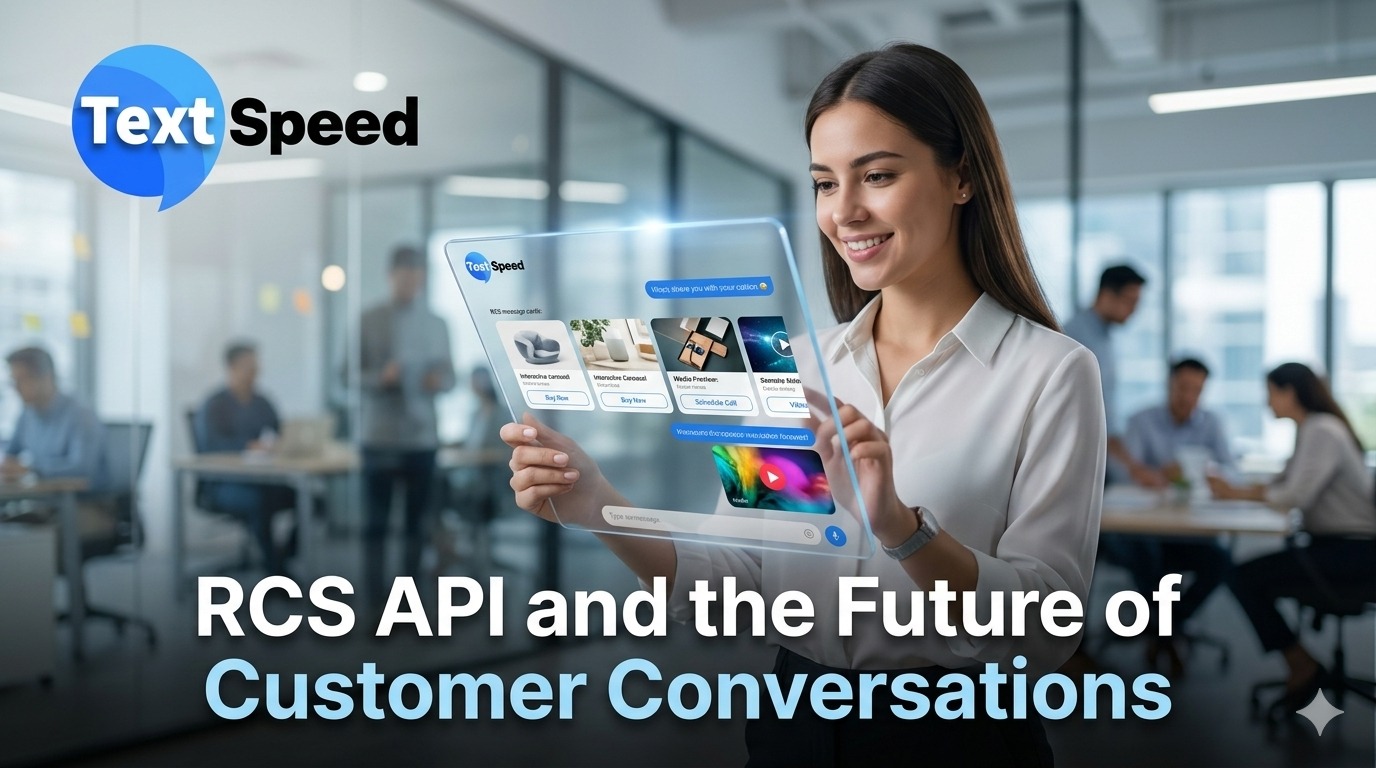
Customer communication has evolved significantly over the years. From traditional phone calls and emails to SMS and instant messaging, businesses have continuously adapted to changing customer expectations. Today, customers expect fast, personalized, and interactive conversations. This is where the RCS API is transforming the future of customer engagement.Rich Communication Services (RCS) is considered the next generation of mobile messaging, offering a richer and more interactive experience than traditional SMS. By leveraging an RCS API, businesses can create meaningful customer conversations that drive engagement, improve customer satisfaction, and increase conversions.
What Is an RCS API?
An RCS API is a communication interface that allows businesses to integrate Rich Communication Services into their applications, websites, CRM platforms, and customer support systems.
Unlike standard SMS APIs that only support text-based messages, an RCS API enables businesses to send:
- High-quality images and videos
- Interactive buttons
- Product carousels
- Rich cards
- Location sharing
- Branded messages
These advanced capabilities make conversations more engaging and user-friendly.
Why Customer Conversations Are Changing
Modern consumers want more than simple text messages. They expect businesses to provide interactive experiences that are convenient and personalized.
Traditional communication channels often face challenges such as:
- Limited engagement
- Low interaction rates
- Lack of personalization
- Basic text-only messaging
The RCS API solves these issues by creating dynamic conversations that encourage customer participation and improve communication effectiveness.
How RCS API Enhances Customer Engagement
1. Interactive Messaging
One of the biggest advantages of an RCS API is the ability to create interactive conversations.
Instead of asking customers to type lengthy responses, businesses can provide:
- Quick-reply buttons
- Action buttons
- Product selections
- Appointment confirmations
This reduces friction and improves the overall user experience.
2. Rich Media Content
Visual content naturally attracts more attention than plain text.
Using an RCS API, businesses can send:
- Product images
- Promotional videos
- Interactive catalogs
- Service demonstrations
Rich media helps customers better understand products and services while increasing engagement rates.
3. Personalized Experiences
Customers appreciate communication that feels relevant to their needs.
An RCS API can integrate with customer databases and CRM systems to deliver:
- Personalized offers
- Customized recommendations
- Account-specific updates
- Individualized notifications
This level of personalization strengthens customer relationships and improves satisfaction.
4. Real-Time Conversations
The future of customer communication is real-time interaction.
An RCS API supports features such as:
- Read receipts
- Typing indicators
- Instant responses
- Two-way messaging
These capabilities create a more natural and conversational experience.
Industries Benefiting from RCS API
E-commerce
Online retailers use RCS API solutions to:
- Share product catalogs
- Send order confirmations
- Provide delivery updates
- Offer personalized recommendations
Banking and Finance
Financial institutions leverage RCS for:
- Transaction alerts
- Account updates
- Authentication messages
- Customer support interactions
Healthcare
Healthcare providers use RCS to send:
- Appointment reminders
- Prescription notifications
- Health alerts
- Patient communication updates
Travel and Hospitality
Travel companies benefit from:
- Booking confirmations
- Travel itineraries
- Flight updates
- Interactive customer support
These use cases demonstrate the versatility of the RCS API across multiple industries.
The Future of Customer Conversations
As digital communication continues to evolve, the role of the RCS API will become even more important.
Future developments may include:
AI-Powered Conversations
Businesses will combine artificial intelligence with RCS to provide smarter and more personalized customer interactions.
Advanced Automation
Automated workflows will become more sophisticated, allowing businesses to manage customer journeys more efficiently.
Seamless Omnichannel Integration
The RCS API will integrate with email, chatbots, social media, and CRM systems to provide a unified communication experience.
Enhanced Analytics
Businesses will gain deeper insights into customer behavior, helping them optimize messaging strategies and improve engagement.
Why Businesses Should Adopt RCS API Today
Early adoption of an RCS API can provide several competitive advantages:
- Improved customer engagement
- Higher interaction rates
- Better customer experiences
- Increased conversion opportunities
- Stronger brand visibility
Companies that invest in modern communication technologies today will be better positioned for future growth.
Conclusion
The future of customer communication is interactive, personalized, and conversational. Traditional messaging channels are no longer enough to meet evolving customer expectations.
An RCS API enables businesses to create engaging customer experiences through rich media, interactive messaging, and real-time conversations. As more organizations embrace digital transformation, RCS is becoming a critical component of modern communication strategies.
Businesses that leverage the power of RCS API today can build stronger customer relationships, improve engagement, and stay ahead in an increasingly competitive marketplace.
FAQs
Q1. What is an RCS API?
An RCS API allows businesses to integrate Rich Communication Services into their communication systems.
Q2. How is RCS API different from SMS?
RCS supports rich media, interactive buttons, read receipts, and advanced messaging features, while SMS supports only text.
Q3. Can businesses personalize messages using RCS API?
Yes, RCS API can integrate with CRM systems to deliver personalized communication.
Q4. Which industries benefit from RCS API?
E-commerce, banking, healthcare, travel, and many other industries benefit from RCS messaging.
Q5. Is RCS API suitable for customer support?
Yes, it enables real-time, interactive customer support experiences.
Written by Textspeed
Telecom & CPaaS Technical Specialists · Reviewed for AccuracyOur content is authored by enterprise communications specialists and strictly reviewed for technical accuracy, regulatory compliance (TRAI/DLT), and industry best practices. Read our Editorial Policy to learn how we maintain trust.