
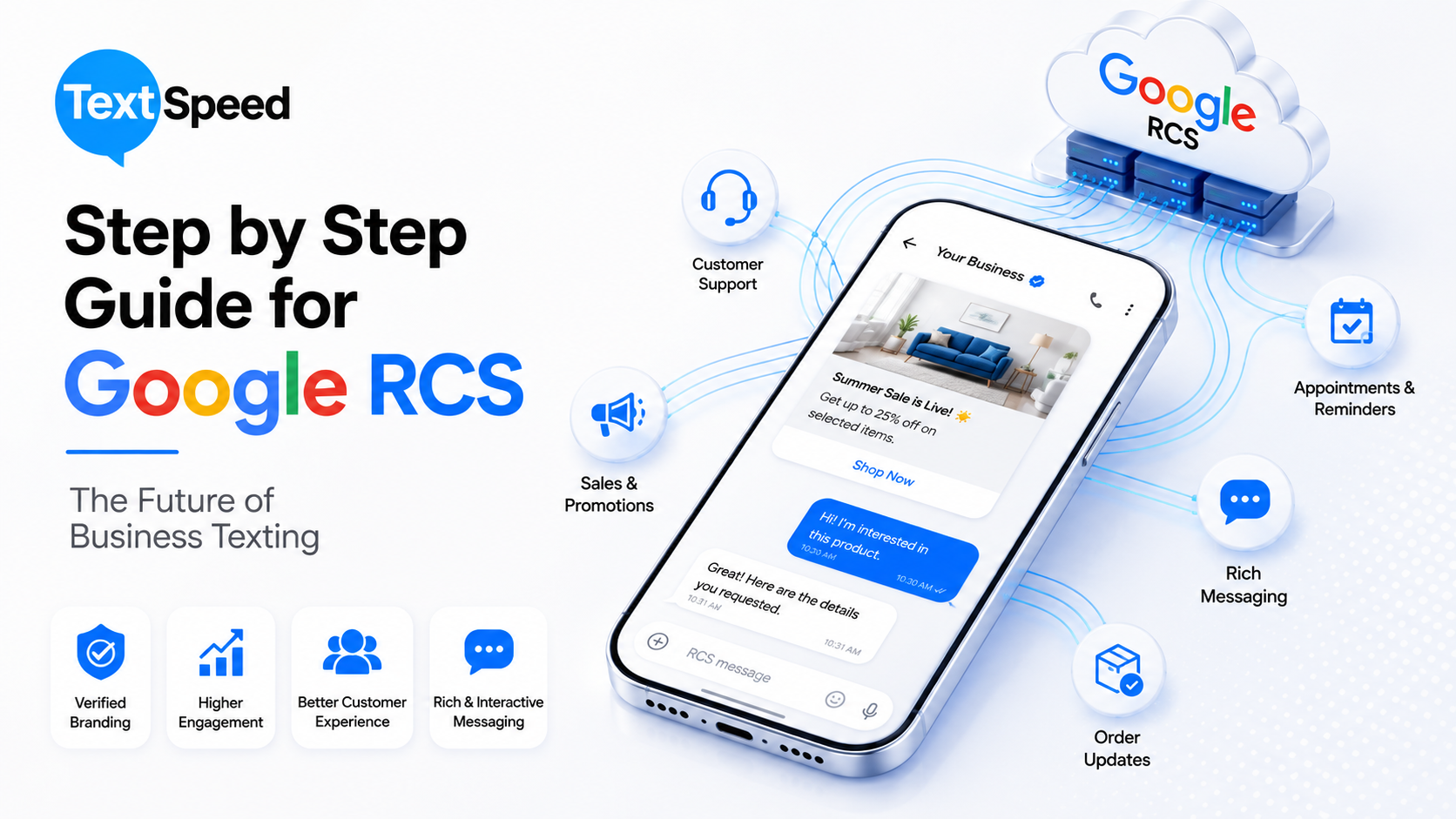
Introduction
Text messaging has been one of the simplest ways for businesses to reach customers. However, traditional SMS has limitations. A standard text message cannot provide the visual experience, interactive buttons, rich media, or branded conversations that modern customers increasingly expect.
This is where Google Rich Communication Services becomes important. RCS is designed to take mobile messaging beyond plain text by introducing features that make business conversations more interactive, informative, and visually engaging.
For companies looking to improve customer communication, RCS can create a more useful experience without forcing customers to download a separate messaging application.
What Is Google Rich Communication Services?
Google Rich Communication Services refers to Google's implementation and support of the RCS messaging standard across supported devices and messaging experiences.
Unlike traditional SMS, RCS can support features such as:
- High-quality images and videos
- Interactive buttons
- Suggested replies
- Product cards
- Business branding
- Location information
- Rich previews
- Group conversations
These capabilities allow businesses to create messaging experiences that feel closer to modern chat applications while using the customer's native messaging environment where RCS is supported.
How Does RCS Work?
RCS uses an internet connection, such as mobile data or Wi-Fi, rather than relying solely on traditional cellular SMS infrastructure.
When two compatible users communicate through an RCS-supported messaging environment, the service can provide features such as typing indicators, read receipts, and richer media sharing.
For business communication, an RCS platform can connect a company's systems with supported messaging infrastructure. This allows businesses to automate notifications, promotions, customer support, and other conversations.
If RCS is unavailable for a particular recipient or situation, fallback mechanisms may allow communication through traditional SMS, depending on the implementation and provider.
Why Businesses Are Interested in RCS
Customers are surrounded by digital messages every day. A basic text notification can easily be overlooked, particularly when it contains only a few lines of information.
Google Rich Communication Services gives businesses more tools to make their communication visually appealing and action-oriented.
For example, an online retailer could send a product message containing an image, description, price information, and a button that takes the customer directly to the relevant product page.
Instead of asking customers to remember information or manually type a response, interactive messaging can guide them toward the next step.
Major Business Uses of RCS
Product Promotions
Retailers can showcase products using images, descriptions, promotional offers, and interactive buttons.
Order Updates
E-commerce businesses can send order confirmations, shipping information, delivery updates, and tracking options in a richer format.
Appointment Reminders
Hospitals, clinics, salons, and service providers can send appointment details with options to confirm, reschedule, or contact support.
Customer Support
Businesses can use suggested replies and interactive menus to help customers find information quickly before transferring complex requests to human agents.
Travel Notifications
Airlines, hotels, and travel companies can provide booking information, schedules, location details, and other useful updates through rich messages.
Benefits of Google RCS for Businesses
Better Customer Engagement
Visual content and interactive actions can make messages more noticeable and easier to use.
Stronger Brand Presence
Businesses can present branded messaging experiences that help customers recognize legitimate communications.
Reduced Customer Effort
Buttons and suggested actions allow customers to complete tasks with fewer steps.
More Informative Communication
Businesses can combine text, images, links, and interactive elements instead of depending on plain text alone.
Better Customer Journeys
RCS can connect marketing, support, notifications, and transactions within a more conversational experience.
What Businesses Should Consider
RCS availability and features can depend on device compatibility, market conditions, messaging platforms, and service providers. Businesses should therefore avoid assuming that every customer will receive the same RCS experience.
A strong strategy can combine RCS with other communication channels such as SMS, WhatsApp, email, and voice. This creates a more reliable communication approach while allowing businesses to use rich messaging where it is supported.
Businesses should also focus on customer consent, relevant content, responsible messaging frequency, and applicable communication regulations.
The Future of Business Texting
The growth of Google Rich Communication Services reflects a wider change in customer expectations. People increasingly want business messages to be useful, visual, and interactive rather than simply informative.
As RCS adoption expands, businesses can use the technology for conversational commerce, customer support, personalized promotions, appointment management, and automated notifications.
The future of business texting is unlikely to be about replacing every existing channel. Instead, businesses will increasingly combine messaging technologies to deliver the right experience to each customer.
Final Thoughts
Google Rich Communication Services is helping transform traditional business texting into a richer and more interactive communication experience. With multimedia content, suggested actions, branding, and conversational capabilities, RCS gives businesses more opportunities to engage customers directly through messaging.
For companies planning their future communication strategy, RCS can be a valuable addition to SMS, WhatsApp, email, and other digital channels. The businesses that focus on useful content, personalization, and customer convenience will be best positioned to benefit from the evolution of mobile messaging.
FAQs
1. What is Google Rich Communication Services?
It is Google's implementation and support of the RCS messaging standard, enabling richer messaging features on supported devices and platforms.
2. How is RCS different from SMS?
RCS can support rich media, interactive buttons, suggested replies, branding, and other features that traditional SMS does not provide.
3. Can businesses use RCS for marketing?
Yes. Businesses can use supported RCS business messaging for promotions, product discovery, customer engagement, and other approved communication use cases.
4. Does RCS work on every phone?
No. Availability depends on device, messaging application, carrier, market, and other technical factors.
5. Can RCS work with SMS?
Yes. Depending on the implementation and provider, SMS fallback can help businesses reach customers when RCS is unavailable.
Written by SEO Specialist
Telecom & CPaaS Technical Specialists · Reviewed for AccuracyOur content is authored by enterprise communications specialists and strictly reviewed for technical accuracy, regulatory compliance (TRAI/DLT), and industry best practices. Read our Editorial Policy to learn how we maintain trust.