
Introduction
Hyderabad has become a strong business hub for technology companies, startups, e-commerce brands, healthcare organizations, educational institutions, real estate companies, and professional services. As businesses grow, managing customer communication manually becomes increasingly difficult.
Email marketing automation can solve part of that challenge by allowing businesses to send relevant emails based on customer actions, preferences, and engagement.
Instead of sending the same message to everyone, email marketing automation platforms help businesses create structured communication journeys—from the first website visit to lead nurturing, purchase, and long-term customer engagement.
What Is Email Marketing Automation?
Email marketing automation uses software to trigger emails automatically based on predefined conditions or customer actions.
For example:
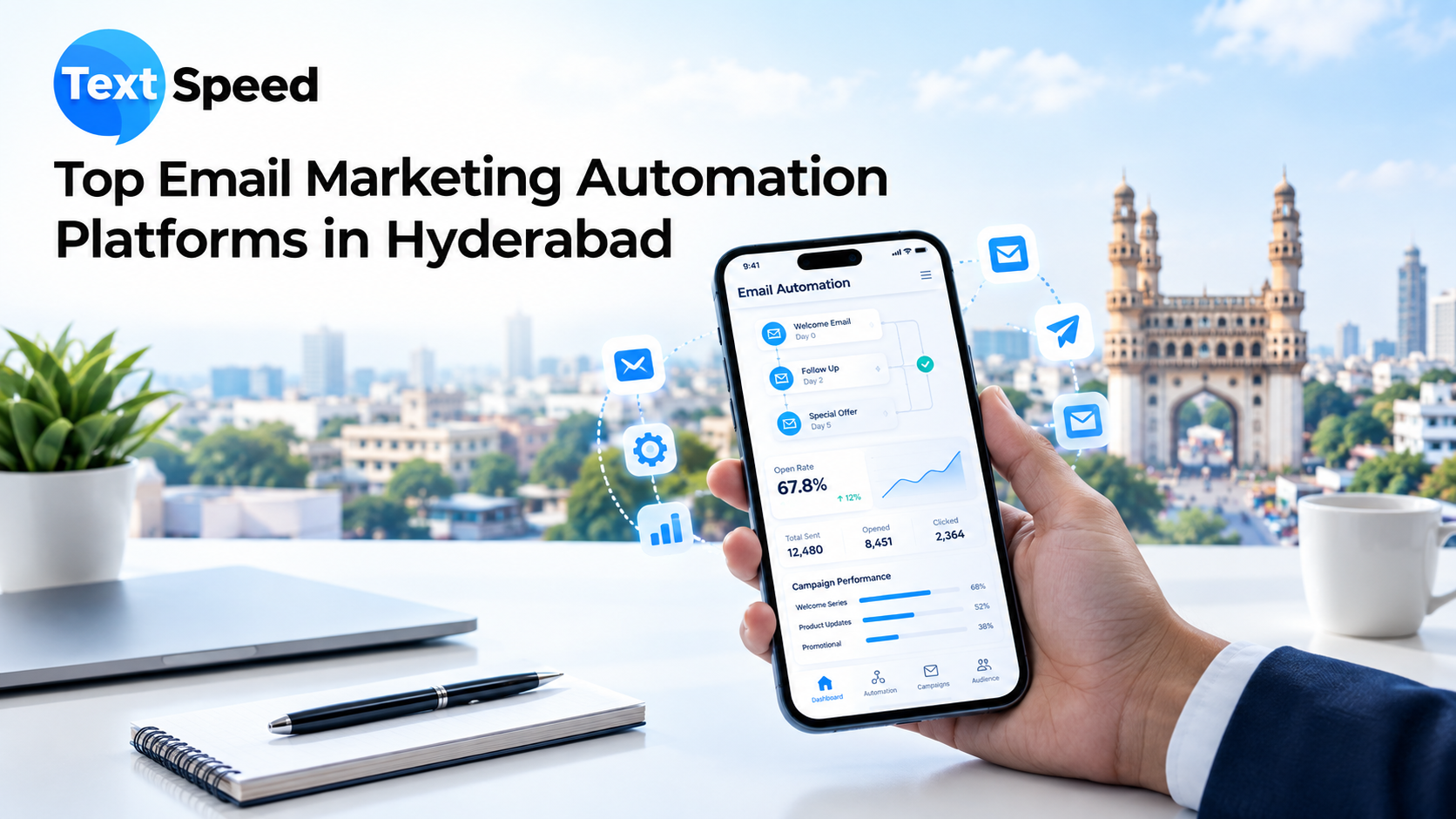
Website visitor submits a form → Welcome email → Follow-up email → Product information → Sales communication
Once the workflow is configured, the platform can manage these communications automatically.
This saves marketing teams time while creating a more consistent customer experience.
Why Hyderabad Businesses Need Email Automation
A growing business may have hundreds or thousands of leads and customers. Sending individual emails to each person is neither practical nor scalable.
Automation can help businesses:
- Nurture new leads
- Welcome new subscribers
- Follow up with prospects
- Promote products and services
- Re-engage inactive customers
- Share newsletters
- Send event reminders
- Support customer retention
For example, a Hyderabad-based SaaS company can automatically send educational content to a new lead before inviting that person to schedule a product demonstration.
Key Features to Compare
Not every platform provides the same capabilities. Businesses should compare features based on their actual marketing requirements.
1. Automated Workflows
Look for a platform that allows you to create visual or rule-based workflows.
Triggers could include:
- Form submission
- Email click
- Website activity
- Purchase
- Subscription
- Customer inactivity
This allows communication to respond to customer behavior rather than relying entirely on manual scheduling.
2. Audience Segmentation
Segmentation allows businesses to divide contacts into relevant groups.
You could segment customers by:
- Industry
- Location
- Purchase history
- Lead stage
- Engagement
- Customer type
A segmented campaign is generally more relevant than sending one generic message to an entire database.
3. Personalization
Modern email campaigns can include personalized information based on available customer data.
Personalization can be as simple as using the customer's name or as advanced as displaying content based on their interests and previous interactions.
4. Analytics and Reporting
A good platform should help marketers understand campaign performance.
Common metrics include:
- Delivery rate
- Open rate
- Click-through rate
- Bounce rate
- Unsubscribe rate
- Conversion rate
These insights can help marketing teams identify which campaigns and customer segments perform best.
5. CRM and API Integration
Businesses often manage customer information across multiple systems.
The right email automation platform should ideally integrate with relevant tools such as:
- CRM software
- Websites
- Lead forms
- E-commerce platforms
- Customer databases
- Analytics systems
- Business applications
API and webhook support can be particularly useful for businesses with custom applications or technical workflows.
Common Email Automation Use Cases
Lead Nurturing
New leads can receive a series of helpful emails instead of being contacted only once.
Welcome Campaigns
When someone subscribes or creates an account, an automated welcome email can introduce the company and its services.
Abandoned Cart Communication
E-commerce businesses can remind customers about products they added to their cart but did not purchase, where appropriate.
Customer Re-Engagement
Inactive subscribers can receive carefully planned campaigns designed to encourage renewed engagement.
Event Communication
Businesses can automate registration confirmations, reminders, and post-event follow-ups.
How to Choose the Right Platform in Hyderabad
When comparing email marketing automation platforms, don't focus only on the monthly subscription price.
Consider:
Automation: Can you create the workflows your business needs?
Scalability: Can the platform support a growing contact database?
Deliverability: Does it provide tools for maintaining healthy email delivery?
Integration: Can it connect with your existing business systems?
Analytics: Are campaign and conversion reports easy to understand?
Usability: Can your marketing team operate the platform without excessive technical support?
Support: Is reliable assistance available when problems occur?
Businesses should also follow responsible email practices, including appropriate consent, unsubscribe mechanisms, contact-list hygiene, and applicable privacy requirements.
Email Automation for Different Industries
The same platform can support different business models.
E-commerce: Product campaigns, cart reminders, customer retention, and promotions.
SaaS: Trial onboarding, educational sequences, product updates, and conversion campaigns.
Education: Course information, event invitations, admission communication, and newsletters.
Healthcare: Relevant service communication and appointment-related messaging, subject to applicable privacy requirements.
Real Estate: Lead nurturing, project updates, property information, and follow-ups.
Professional Services: Enquiry follow-ups, newsletters, educational content, and customer communication.
The Real Value of Automation
Automation is not about sending more emails. It is about sending the right communication at the right stage.
A customer who has just subscribed should not necessarily receive the same message as someone who has already purchased. Automation allows businesses to create different journeys for different audiences.
This makes email marketing automation platforms valuable for companies that want to combine scale with personalized communication.
Conclusion
Choosing among email marketing automation platforms requires businesses to look beyond basic email-sending features. Automation workflows, segmentation, personalization, analytics, integrations, scalability, deliverability, and support should all be considered.
For Hyderabad businesses, a well-planned email automation strategy can help turn leads into customers, improve retention, and maintain consistent communication without requiring marketers to manually manage every interaction.
The best platform is ultimately the one that fits your audience, business goals, technical environment, and future growth—not simply the one with the longest feature list.
FAQs
1. What are email marketing automation platforms?
They are tools that help businesses automatically create, schedule, personalize, and track email campaigns based on customer actions.
2. Can small businesses use email automation?
Yes. Small businesses can automate welcome emails, lead follow-ups, newsletters, and customer engagement campaigns.
3. Is email automation useful for Hyderabad businesses?
Yes. It can support lead nurturing, customer retention, promotions, and communication across many industries.
4. Can email automation connect with a CRM?
Yes. Many platforms provide CRM integrations, APIs, or webhooks for connecting customer data and marketing workflows.
5. What should I compare before choosing a platform?
Compare automation features, deliverability, segmentation, integrations, analytics, scalability, pricing, and customer support.
Written by SEO Specialist
Telecom & CPaaS Technical Specialists · Reviewed for AccuracyOur content is authored by enterprise communications specialists and strictly reviewed for technical accuracy, regulatory compliance (TRAI/DLT), and industry best practices. Read our Editorial Policy to learn how we maintain trust.