
Introduction
A customer journey usually contains several interactions rather than one isolated message.
For example, an online shopper may:
Visit a website → Submit an enquiry → Receive product information → Place an order → Get delivery updates → Request support
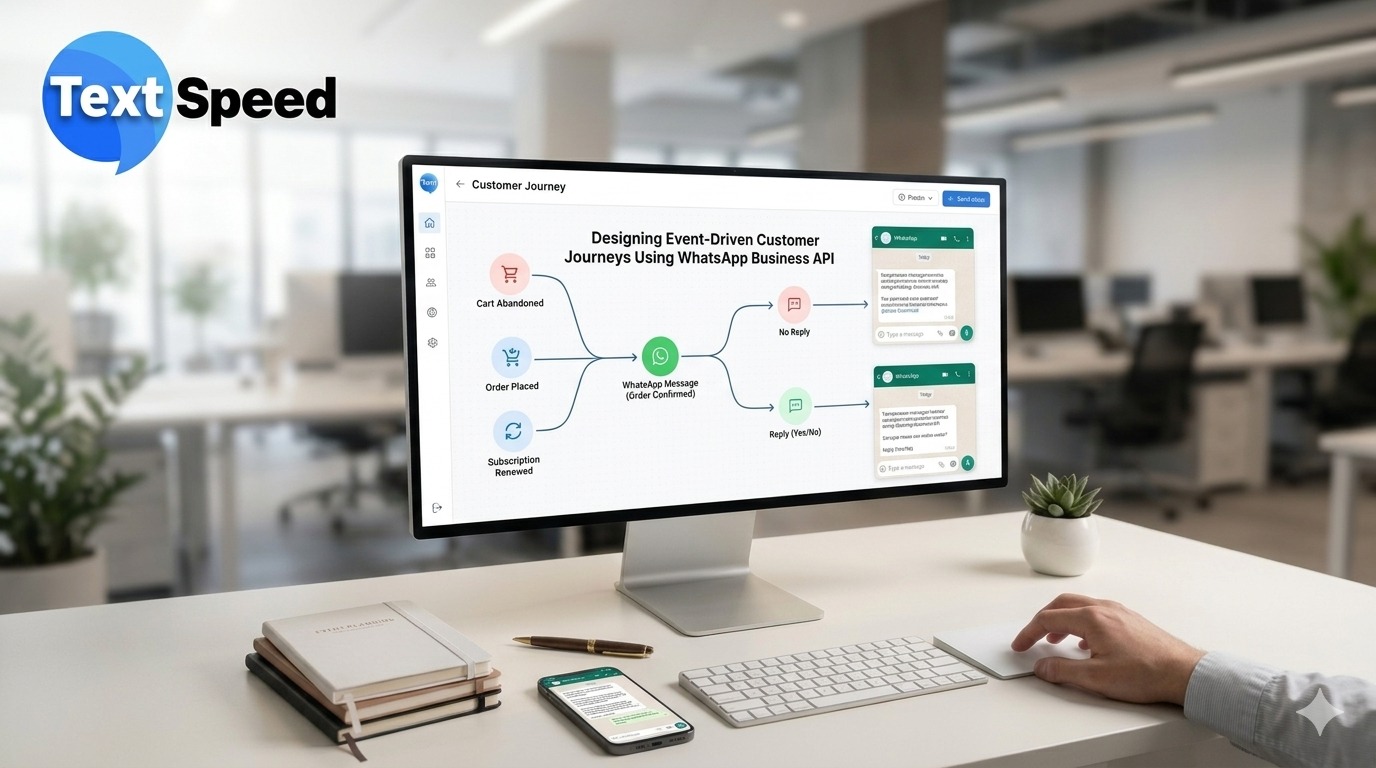
An event-driven communication system connects these actions with automated messaging.
Instead of sending the same message to every customer at the same time, the business system waits for a specific event and then starts the appropriate communication workflow.
This makes a WhatsApp Bulk Message strategy more contextual because the message can be linked to what the customer has actually done.
How Event-Driven WhatsApp Messaging Works
The process typically involves four components:
1. Customer Action
A customer performs an activity such as registering, purchasing, booking an appointment, or submitting an enquiry.
2. Business System Detects the Event
The website, CRM, application, or other software identifies the action.
3. Communication Workflow Is Triggered
The system sends the relevant information to the WhatsApp messaging platform through an API or connected integration.
4. Customer Receives the Message
The customer receives an appropriate WhatsApp communication based on the event and applicable messaging requirements.
For example:
New order → Order confirmation → Dispatch event → Shipping update → Delivery event → Delivery notification
Each message has a purpose instead of being an unrelated broadcast.
Why Event-Driven Messaging Matters
Traditional bulk communication often starts with the question: Who should receive this campaign?
Event-driven communication starts with a different question: What just happened?
That small change can make a major difference to the customer experience.
A person who has just completed a purchase needs order information, not a generic introduction to the company. Someone who has requested a property enquiry may need a follow-up related to that enquiry rather than an unrelated promotion.
The timing and context of the communication become part of the message strategy.
Practical Use Cases for WhatsApp Bulk Message Automation
E-Commerce
An online store can create different messaging triggers for:
- New orders
- Payment confirmation
- Shipment
- Delivery
- Cancellation
- Return requests
Each event can launch a relevant communication flow.
Lead Management
When a customer submits an enquiry, the business can trigger a welcome response, collect additional information, and notify the sales team.
For example:
Lead submitted → Welcome message → Requirement collection → Sales assignment → Follow-up
Appointment-Based Businesses
Healthcare, education, beauty, consulting, and service businesses can use events such as appointment creation, rescheduling, or cancellation to trigger appropriate WhatsApp communication.
Real Estate
A property enquiry can start a communication journey that includes enquiry confirmation, property details, site-visit coordination, and follow-up.
Financial Services
Suitable workflows can be created for customer notifications and service interactions, subject to applicable security, privacy, regulatory, and platform requirements.
Personalization Without Manual Work
Automation does not have to mean sending identical messages to everyone.
A business can structure its communication around available customer information and the event that triggered the message.
For example:
Event: Customer requests a product demonstration
Message: Confirmation with selected product and appointment details
Another customer may request a different service and receive a different message.
This creates a more relevant experience while reducing repetitive work for employees.
API Integration Is the Foundation
For event-driven communication to work effectively, WhatsApp needs to be connected to the system where customer events occur.
An API can connect WhatsApp communication with:
- CRM platforms
- E-commerce websites
- Mobile applications
- ERP systems
- Booking platforms
- Lead-management systems
- Customer databases
Suppose a customer completes an online registration. The registration system can trigger an API request containing the required information. The communication platform can then process the request and send the appropriate WhatsApp message using the applicable business messaging framework.
Bulk Does Not Mean Sending Everything to Everyone
The term WhatsApp Bulk Message can sometimes create the impression that successful messaging is about volume.
In practice, businesses should separate their customer database into meaningful groups and connect messages to relevant events.
For example, a retailer might have separate workflows for:
- New customers
- Existing customers
- Recent purchasers
- Customers awaiting delivery
- Customers requesting support
This approach makes communication more targeted and easier to manage.
Timing Is Part of the Customer Experience
An event-driven journey also gives businesses greater control over timing.
A confirmation may need to arrive immediately after registration. A reminder may be scheduled before an appointment. A delivery notification may be triggered when an order reaches a particular stage.
Sending the right information too early or too late can reduce its usefulness.
Businesses should therefore define timing rules for each communication workflow.
Compliance and Customer Permission
Automation does not remove the need to follow WhatsApp's applicable business messaging requirements.
Businesses should obtain appropriate customer permission where required, use approved templates for applicable business-initiated communications, and respect customer requests to stop receiving messages.
They should also consider applicable privacy and industry regulations when processing customer information.
Automation should make communication more organized—not remove customer control.
Measuring an Event-Driven Journey
Businesses should monitor each stage of the workflow instead of looking only at the number of messages sent.
Useful measurements may include:
- Delivery status
- Read activity
- Customer responses
- Button or link interactions
- Conversion activity
- Support escalations
- Drop-off points
For example, if many customers receive an order confirmation but few interact with a follow-up message, the business can review the timing, content, or purpose of that step.
How Textspeed Technology Can Support WhatsApp Journeys
Textspeed Technology provides business communication solutions including WhatsApp Business API, Bulk SMS, Transactional SMS, RCS, Voice, IVR, Email, OTP, Chatbot, and API integration.
Businesses can use suitable integrations to connect communication with customer actions across their existing systems.
A possible workflow could look like:
Customer enquiry → WhatsApp response → Lead qualification → Sales follow-up → Appointment reminder
The exact workflow can be designed according to business requirements and applicable messaging policies.
Conclusion
An event-driven WhatsApp Bulk Message strategy changes the way businesses think about automated communication. Instead of creating one large campaign and sending the same information to everyone, businesses can connect messages to specific customer actions.
A registration can trigger a welcome message. A purchase can start an order-update sequence. An appointment can create a reminder workflow. A support request can route the customer toward the appropriate assistance.
The combination of APIs, customer data, automation, and well-planned communication rules allows businesses to create journeys that are timely and relevant.
The goal is not simply to send more WhatsApp messages. It is to make every automated message have a clear reason for being sent.
FAQs
1. What is an event-driven WhatsApp journey?
It is an automated communication workflow where a customer action triggers a relevant WhatsApp message or sequence.
2. Can WhatsApp Bulk Message campaigns be automated?
Yes. Suitable API integrations can connect customer events with automated WhatsApp communication.
3. What can trigger a WhatsApp message?
Events can include registrations, purchases, bookings, enquiries, payments, delivery updates, or support requests.
4. Can event-driven WhatsApp messaging integrate with CRM systems?
Yes. APIs can connect WhatsApp communication with compatible CRM, e-commerce, ERP, and other business applications.
5. Is customer permission important?
Yes. Businesses must follow applicable WhatsApp messaging policies, consent requirements, templates, and customer communication preferences.
Written by SEO Specialist
Telecom & CPaaS Technical Specialists · Reviewed for AccuracyOur content is authored by enterprise communications specialists and strictly reviewed for technical accuracy, regulatory compliance (TRAI/DLT), and industry best practices. Read our Editorial Policy to learn how we maintain trust.