
Introduction
Businesses rarely rely on a single communication channel anymore. A customer may receive an OTP through SMS, an order update on WhatsApp, a promotional message through RCS, and a support call through voice. Managing all these channels separately can create technical complexity. This is where Communications Platform as a Service (CPaaS) becomes useful.
CPaaS companies provide communication infrastructure and APIs that allow businesses to add messaging, voice, video, verification, and automation capabilities to their existing applications and workflows.
What Is CPaaS?
CPaaS stands for Communications Platform as a Service. It is a cloud-based communication model that lets businesses integrate communication features into websites, applications, CRM systems, and other software through APIs and development tools.
Instead of building messaging or voice infrastructure from scratch, a company can connect with a CPaaS platform and use the communication services it needs.
Depending on the provider, services may include:
- SMS and transactional messaging
- WhatsApp Business communication
- RCS messaging
- Voice and IVR
- OTP and verification
- Email communication
- Chatbots
- API integrations
- Customer engagement automation
What Do CPaaS Companies Provide?
The services offered can vary from one provider to another. However, most CPaaS platforms focus on helping businesses manage communication through programmable technology.
SMS APIs
Businesses can connect SMS functionality to their applications for OTPs, alerts, notifications, reminders, and other customer communications.
WhatsApp Business Integration
Businesses can integrate WhatsApp into their customer communication workflows for notifications, support, campaigns, and automated conversations.
Voice and IVR
Voice APIs and IVR systems can help businesses automate calls, route customers to the right department, and provide interactive self-service options.
RCS Business Messaging
RCS can provide richer messaging experiences through features such as images, buttons, suggested actions, and branded conversations where supported.
Authentication and OTP
CPaaS platforms can provide APIs for sending verification codes during registration, login, transactions, and account recovery.
Examples of CPaaS Companies
The CPaaS market includes global communication technology providers as well as regional and specialized platforms. Companies such as Twilio, Vonage, Sinch, Infobip, and Bird offer various programmable communication capabilities.
Regional providers may also focus on specific markets, messaging channels, compliance requirements, or business segments.
When comparing CPaaS companies, businesses should examine the actual services, geographic coverage, integration options, pricing model, compliance support, and technical capabilities rather than relying only on the provider's overall size or brand recognition.
How CPaaS Helps Businesses
One Communication Layer
A CPaaS platform can bring multiple communication channels together through APIs and a common technical environment.
Faster Integration
Businesses can add communication capabilities to their existing applications without developing every messaging or voice component internally.
Automation
Messages and calls can be triggered automatically based on customer actions, business events, or predefined workflows.
Scalability
Cloud-based communication infrastructure can support changing message and interaction volumes as business requirements evolve.
Improved Customer Experience
Using the appropriate channel for each interaction can make communication more convenient. For example, an OTP may be sent through SMS while a customer support workflow may use WhatsApp or voice.
How to Choose Among CPaaS Companies
The right choice depends on the business's communication requirements. Before selecting a provider, consider these factors:
- Communication Channels
Check whether the platform supports the channels your business actually needs. - API Quality
Review documentation, SDKs, authentication methods, webhooks, and integration options. - Geographic Coverage
If you operate across multiple countries, verify regional availability and carrier connectivity. - Compliance
Check support for applicable regulations, sender requirements, templates, consent, and data-handling obligations. - Scalability
Consider whether the platform can handle your current volume and future growth. - Analytics and Reporting
Delivery reports, message logs, call records, and communication analytics can help teams monitor performance. - Customer Support
Technical support becomes particularly important when communication APIs are connected to critical business workflows.
CPaaS for Different Business Needs
E-commerce companies can use CPaaS for order confirmations, delivery notifications, and customer support.
Banks and financial services can use communication APIs for authentication, transaction alerts, and customer notifications.
Healthcare organizations can use them for appointment reminders, confirmations, and patient communication.
Education companies can automate enrollment updates, reminders, and important announcements.
Real estate businesses can connect communication APIs with lead management systems to follow up with prospects and send property-related notifications.
This flexibility is one reason CPaaS companies are becoming an important part of modern business communication infrastructure.
Textspeed Technology as a CPaaS Platform
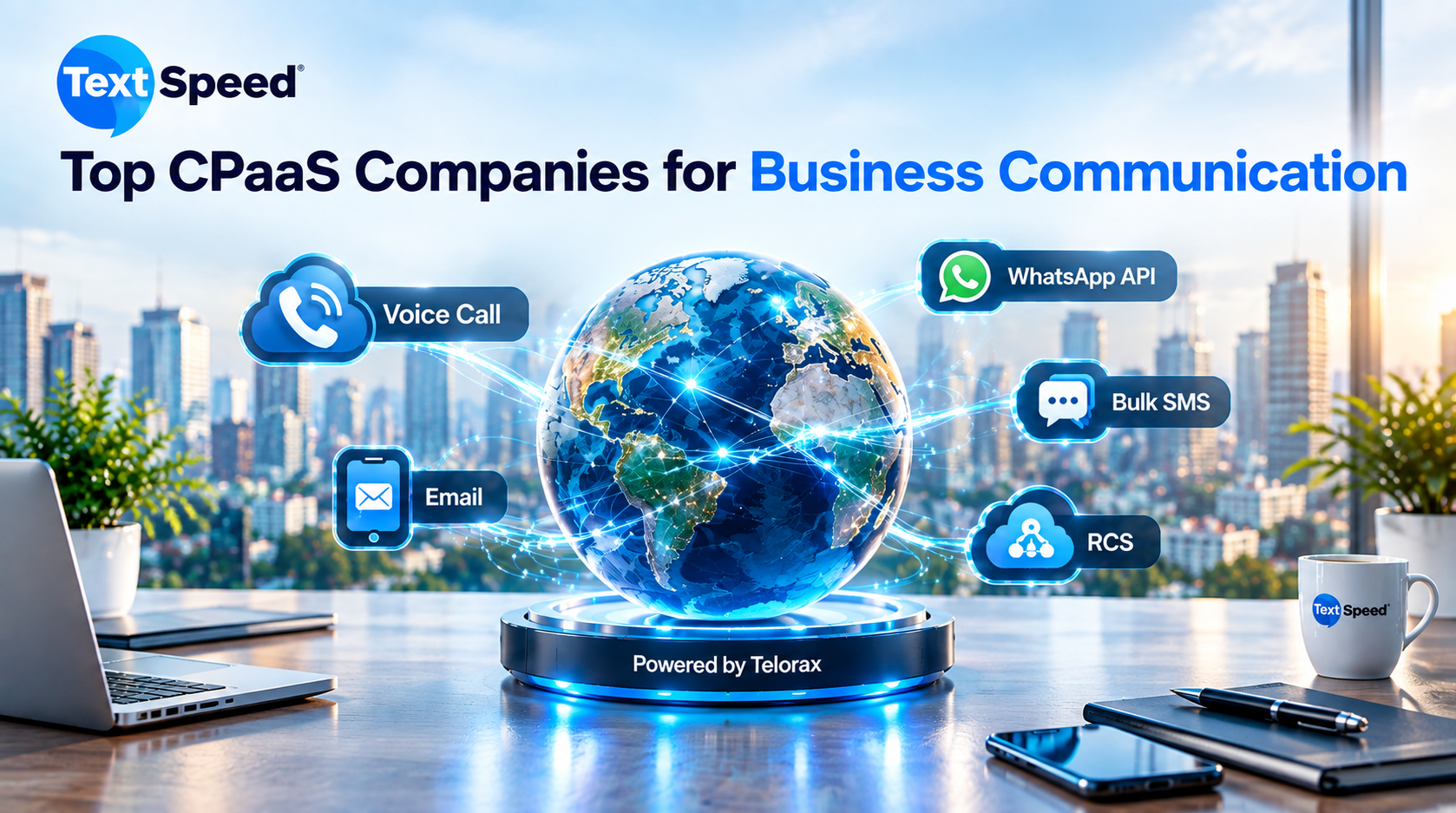
Textspeed Technology provides a communication ecosystem designed to bring multiple business communication channels into one platform. Its services include Bulk SMS, WhatsApp Business API, RCS, Voice, IVR, Email, SMPP, OTP, chatbots, and API integration.
Businesses can connect these communication services with their websites, applications, CRM systems, and other business workflows, depending on their requirements.
Final Thoughts
The growing number of customer communication channels has made integration increasingly important for businesses. CPaaS companies help solve this challenge by providing programmable communication services that can be connected to existing business applications.
Rather than selecting a provider based only on the number of services advertised, businesses should compare channel availability, APIs, scalability, compliance, reporting, geographic coverage, pricing structure, and technical support.
A well-chosen CPaaS platform can provide the infrastructure businesses need to build automated and connected customer communication workflows.
FAQs
- What does CPaaS mean?
CPaaS means Communications Platform as a Service, a cloud model for integrating communication capabilities through APIs. - What services do CPaaS companies offer?
Common services include SMS, WhatsApp, RCS, voice, IVR, OTP, email, chatbots, and communication APIs. - Who can use CPaaS?
E-commerce, banking, healthcare, education, logistics, real estate, SaaS, and other businesses can use CPaaS. - Is CPaaS suitable for small businesses?
Yes. Businesses can select only the communication channels and integrations they need. - How should I compare CPaaS companies?
Compare their channels, API capabilities, pricing, scalability, compliance support, coverage, analytics, and technical support.
Written by SEO Specialist
Telecom & CPaaS Technical Specialists · Reviewed for AccuracyOur content is authored by enterprise communications specialists and strictly reviewed for technical accuracy, regulatory compliance (TRAI/DLT), and industry best practices. Read our Editorial Policy to learn how we maintain trust.